
Skip to content
The Accursed Mountains in winter

The range

The Accursed Mountains.

Bjeshkët e Nemuna — the range that runs across Kosovo, Albania and Montenegro, and takes the heaviest snowfall in southeastern Europe.

2,694 mHighest peak, Maja Jezercë
2,656 mGjeravica, highest in Kosovo
3Countries
~2,500 mmAnnual precipitation

Where they are

The southern end of the Dinaric Alps.

The Accursed Mountains — Bjeshkët e Nemuna in Albanian, Prokletije in the Slavic languages, and sometimes called the Albanian Alps — are a rugged, remote range in the Western Balkans, spanning Albania, Montenegro and Kosovo. They form the southernmost section of the Dinaric Alps, the chain that runs down from Italy along the Adriatic.

The range is defined by sharp peaks, deep valleys and glacial lakes. Its highest point is Maja Jezercë in Albania at 2,694 metres; on the Kosovo side, Gjeravica reaches 2,656 metres and is the highest mountain in the country. Many other summits clear 2,000 metres.

Sharp limestone ridges above the valley

Snowfall

Why they hold so much snow.

This is the part that matters if you ski. The range sits close to the Adriatic, and it is the rainiest area in the region — around 2,500 mm of precipitation a year. Storms coming off the Atlantic collect moisture over the Adriatic and drop it on these peaks.

At the same time the climate shifts from Mediterranean to continental as you move inland, so the air here is cold and dry. Wet storms meeting cold air is the combination that produces deep coverage and light snow. It is why these mountains get the highest snowfall in southeastern Europe, and why the comparison people reach for is British Columbia rather than the Alps.

The terrain

North and northeast, and empty.

Above the town of Deçan in western Kosovo, the slopes face predominantly north and northeast — the aspects that hold cold snow longest. The ski area we work is around four kilometres wide, with runs averaging 2.5 kilometres and reaching four. Base elevations sit between 1,500 and 1,860 metres, with drop-offs up to 2,550.

It is empty ground. The area is known for its remoteness and its low visitor numbers, and in winter there is no road access at all until a snowcat opens one.

The range in winter

Wildlife, forest and limestone.

Wildlife

The range supports brown bear, grey wolf, lynx, wild boar, chamois and red deer. Encounters with people are rare — most of these animals want nothing to do with you, and in winter the higher ground is quiet. Golden eagles, peregrine falcons and owls are all present.
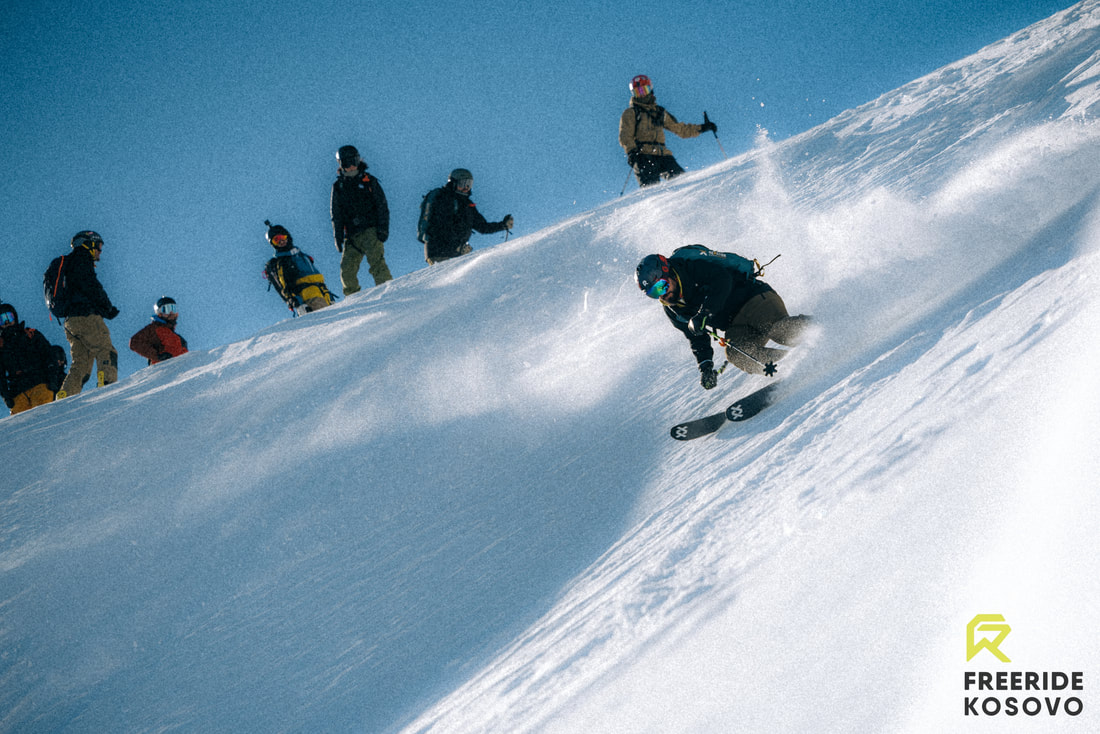
In winter

The vegetation that stays visible through winter is mostly conifer — spruce and silver fir — which is what gives the tree skiing its shape. The geology underneath is largely limestone, dolomite and shale, and the limestone formations are a distinctive feature of the range: the same rock that produces the sharp ridgelines produces the couloirs.

In summer

In summer this is grazing land and a section of the Peaks of the Balkans trail, the long-distance route linking the three countries. Between January and March it is snow, and almost nobody is up here.

The three zones we ski

The names

One range, six names.

People arrive at this range under a different name depending on which country, language or guidebook they started from. They all mean the same mountains.

What mountain range is in Albania?

Northern Albania’s high ground is the Accursed Mountains, known in Albanian as Bjeshkët e Nemuna and often called the Albanian Alps. The range does not stop at the border: it continues into Kosovo and Montenegro, and it forms the southernmost section of the Dinaric Alps. Albania’s highest point, Maja Jezercë at 2,694 metres, is in it.

Albanian Alps, Prokletije, cursed mountains — same place?

Yes. Bjeshkët e Nemuna is the Albanian name and translates roughly as “the cursed mountains”, which is where the English “Accursed Mountains” comes from. Prokletije is the name used in the Slavic languages of Montenegro and Serbia. “Albanian Alps” and “Kosovo Alps” are informal names used by visitors. All of them describe the same range across the three countries.

Where are they, and which countries do they cross?

Albania, Montenegro and Kosovo, in the Western Balkans. The Kosovo side sits above Deçan and Peja in the west of the country and holds Gjeravica at 2,656 metres, the highest mountain in Kosovo. The three borders meet at a peak above our third zone, Bjeshka e Dobroshit.

How high are they?

Maja Jezercë in Albania is the highest at 2,694 metres. Gjeravica in Kosovo reaches 2,656 metres, and many other summits clear 2,000. The terrain we ski runs from about 1,500 metres at the valley floors to drop-offs at 2,550.

Can you visit them in winter?

On the Kosovo side, not on your own — there is no road access above the valleys once the snow arrives, and no lift infrastructure. In summer the Peaks of the Balkans trail crosses the range and it is walkable. Between January and March the only regular winter access above Deçan is by snowcat, which is what we run.

Next step

Ski the Kosovo side of the range.

Enquiries

Tell us when you want to come.

Dates for the 2027 season are set with each group. We reply to every enquiry within twelve hours. No deposit is taken at this stage.

Confident off-piste skiing or riding in variable snow is required. Your avalanche kit is provided.
Or email info@catskikosovo.com · call +383 49 833 322